Is a single AI platform better than a stack of specialized tools? Discover how to optimize your AI automation strategy for maximum ROI.
Introduction
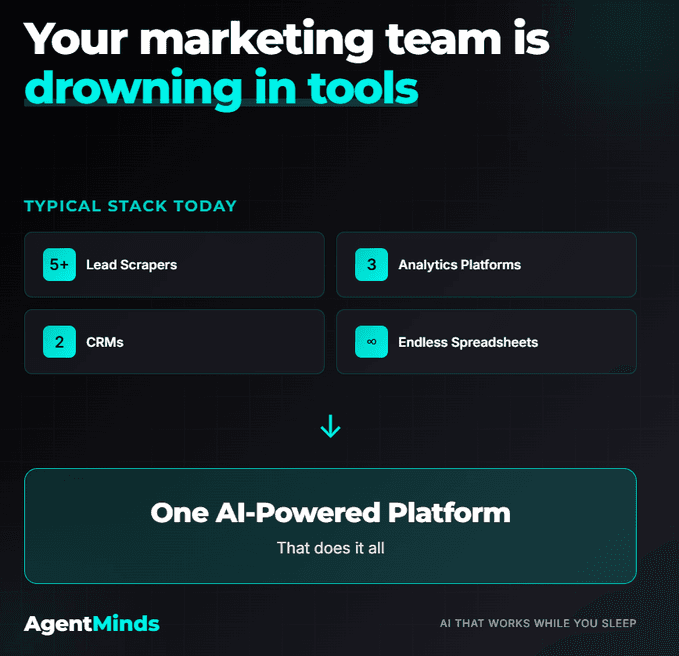
In the early days of the AI boom, the strategy was simple: find a tool for every task. Need copy? Get Tool A. Need images? Get Tool B. Need data analysis? Get Tool C. Fast forward to today and many businesses are suffering from 'AI Sprawl'—a disjointed mess of subscriptions, logins and fragmented data.
The Case for Multiple Specialized Tools
The 'Best-of-Breed' Approach
Specialized tools often offer deeper functionality for specific niches. For example, a tool dedicated solely to AI-driven legal discovery will likely outperform a general model.
- Pro: Deep, niche features.
- Con: Data silos and 'Subscription Fatigue'.
The Case for One Unified AI Platform
The 'Consolidated' Approach
Unified platforms (like AgentMinds custom builds) allow your data to flow seamlessly between tasks. When your CRM AI talks directly to your Content AI, the context remains unbroken.
- Pro: Single source of truth, lower costs and seamless workflows.
- Con: Potential for 'Jack of all trades, master of none' if not built correctly.
| Approach | Best For | Tradeoff |
|---|---|---|
| Multi-Tool | Early exploration & custom dev | High maintenance / Fragility |
| Unified | Production & Scaling | Less edge-case customisation |
The Verdict for 2026
The winner isn't a single tool or a hundred tools—it's Integrated Automation. The goal is a centralized 'Brain' that can trigger specialized 'Skills'.
The Bottom Line
Don't let tool sprawl slow your business down. Focus on integration over accumulation.